15% Isobutanol Blending in Diesel: India’s New Fuel Experiment
15% Isobutanol Blending in Diesel: India’s New Fuel Experiment
June 9, 2026 — The Indian government is preparing to introduce a major change in the diesel sector. After the successful rollout of ethanol blending in petrol, authorities are now planning to blend 15% isobutanol in diesel.
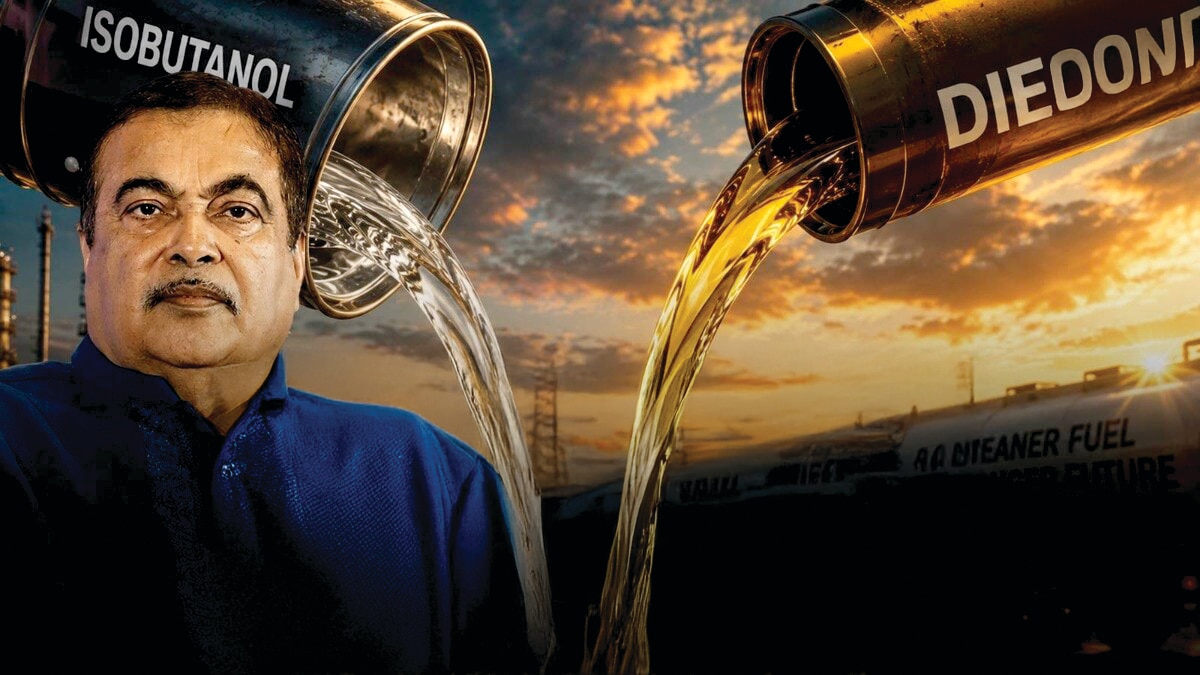
Union Road Transport and Highways Minister Nitin Gadkari made the announcement during the launch of India’s first flex-fuel car (Wagon R Flex Fuel). He stated that while ethanol cannot be directly blended with diesel, isobutanol — derived from ethanol — offers a viable and promising alternative.
“We have successfully run two Kirloskar generator sets — one on 100% ethanol and another on isobutanol. Engines can be developed for this, and we are preparing to blend 15% isobutanol in diesel,” Gadkari said.
Why Isobutanol?
Isobutanol (C₄H₁₀O) is a colourless, flammable organic liquid belonging to the alcohol group. It has higher energy density than ethanol and blends more effectively with diesel. The key objectives behind this initiative are:
- Reducing India’s heavy dependence on imported crude oil
- Creating new income sources for farmers through ethanol and isobutanol production
- Lowering vehicular pollution and greenhouse gas emissions
Technical Aspects & Challenges
Diesel quality is primarily measured by its Cetane Number, which indicates ignition quality. Regular Indian diesel has a cetane number of around 51 or higher, while isobutanol has a much lower cetane number of 15–20.
A 15% blend is not expected to drastically affect modern engines. However, higher blending ratios could lead to:
- Ignition delay
- Reduced power output and mileage
- Increased engine noise and vibration, especially in older vehicles
On the positive side, studies suggest that isobutanol blending can help reduce particulate matter and certain harmful emissions, making it environmentally beneficial.
Impact on Farmers & Old Vehicles
India is one of the world’s largest tractor markets, with millions of old tractors still in use, particularly in states like Punjab, Uttar Pradesh, Haryana, Maharashtra, and Madhya Pradesh. Many farmers rely on decades-old machinery that may not be compatible with the new fuel blend.
The government will need to provide adequate support, awareness programs, and possibly incentives to ensure a smooth transition for the agricultural community.
Government’s Broader Green Fuel Push
This development comes alongside other initiatives such as the recent launch of E85 fuel in Delhi. The government, along with companies like Praj Industries and ARAI, has been actively working on isobutanol for some time.
While no official nationwide rollout timeline has been announced, the momentum suggests implementation could begin in the coming months in select regions.
The Road Ahead
If executed successfully, 15% isobutanol blending in diesel could mark the beginning of a new chapter in India’s energy security — similar to the ethanol blending program in petrol. Success will depend on careful calibration of the blend ratio, engine compatibility (especially for older vehicles), extensive testing, and strong support for farmers.
This experiment has the potential to significantly cut India’s oil import bill, boost rural incomes, and contribute to cleaner air — provided the transition is managed thoughtfully for all stakeholders.