Why is a Pesticide Banned in 112 Countries Still Being Sold in India?
Monocrotophos is an extremely dangerous insecticide. While 112 countries have completely banned this 'red label' chemical, Indian policymakers have been playing the 'committee game' with companies for years.
### How the loophole works
The government has banned only the domestic use of 'Monocrotophos 36% SL' formulation. However, the production and export of its technical grade and other formulations (powder, granular, cocktails) remain allowed. Companies exploit this loophole and continue manufacturing it. This banned poison then leaks into the domestic market under different names and concentrations.
### Dangerous History
Monocrotophos originated from nerve gas research during World War II. In 1965, Swiss company Ciba AG and Shell Chemical developed it for agricultural use. It is a systemic insecticide that is absorbed by plants and kills insects instantly.
In India, it became popular during the Green Revolution. The Indian Institute of Chemical Technology (IICT) even developed a local manufacturing process, after which Indian companies started producing it on a large scale.
### How toxic is it?
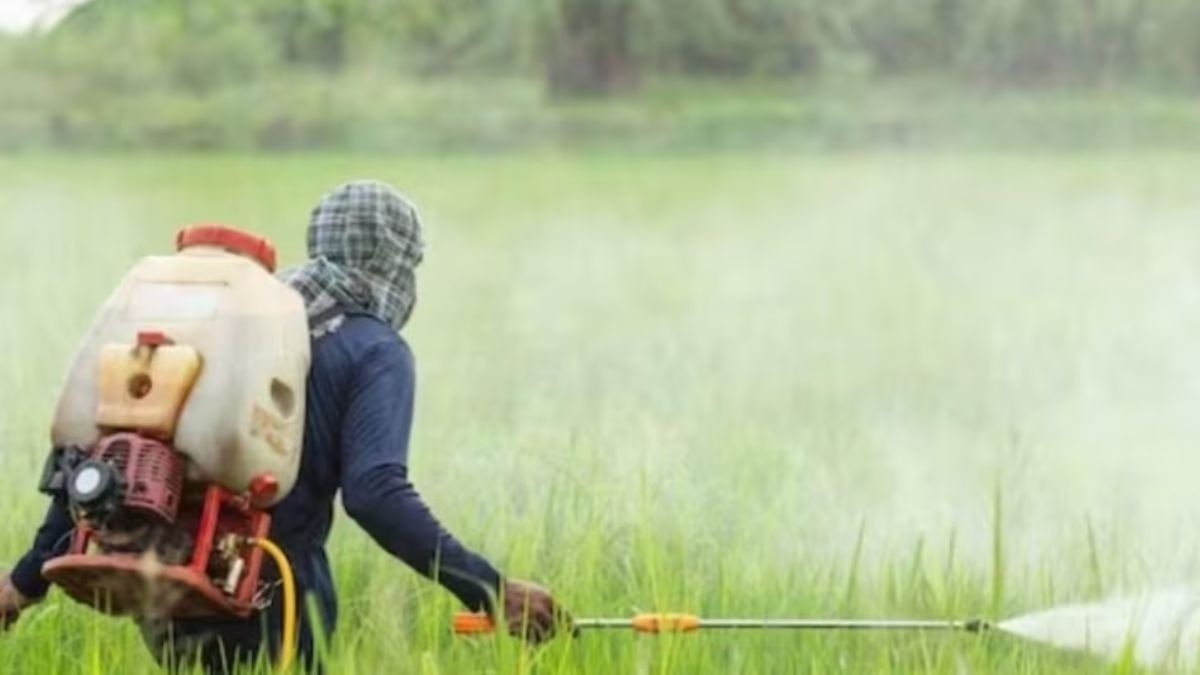
The World Health Organization (WHO) has classified it as Class Ib — 'highly hazardous'. It is an organophosphate that attacks the human nervous system. Medical studies show that 87% of poisoning victims require ventilators, and the mortality rate is 23.8%. Even skin contact or inhalation during spraying can be fatal. It also kills birds, bees, and beneficial insects.
### Major Tragedies in India
- **Mid-Day Meal Tragedy (2013)**: In Saran district, Bihar, 23 children died after their food was contaminated with Monocrotophos stored in an old pesticide container.
- **Yavatmal Tragedy (2017)**: In Maharashtra's Vidarbha region, over 20 farmers and farm workers died due to poisoning while spraying the chemical without proper safety gear.
Similar incidents have been reported across the country, yet the chemical continues to be used.
### Government's Flip-Flop
In 2020, the government proposed banning 27 toxic pesticides including Monocrotophos. After strong lobbying by the industry, a review committee was formed. In 2023, the government reversed its decision for most chemicals. However, due to public pressure and a Supreme Court petition, it was finally banned in October 2024.
Despite the ban, loopholes allow continued production and illegal sales in rural markets. Farmers prefer it because it is cheap and fast-acting against pests.
The story of Monocrotophos is a classic example of the gap between paper bans and ground reality in India's agriculture sector.